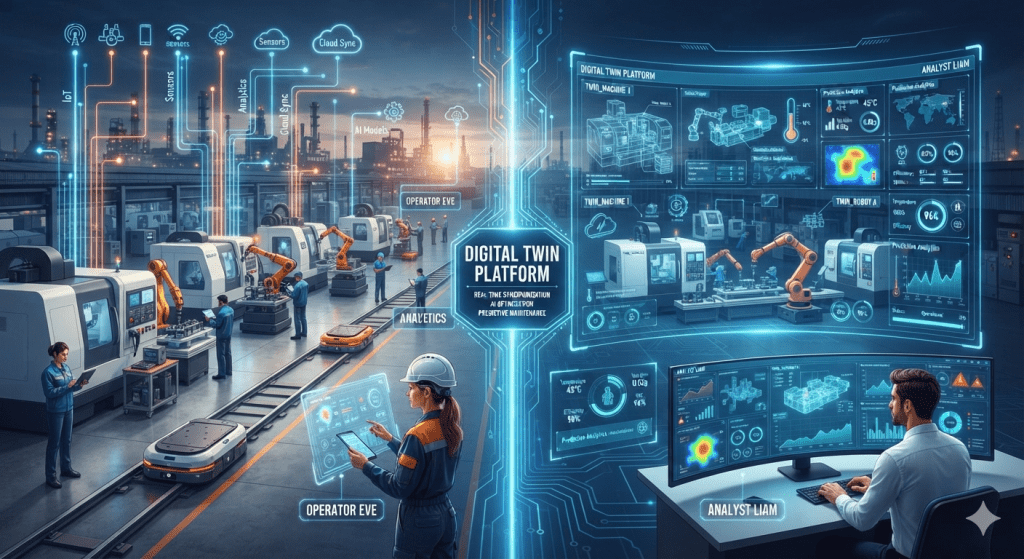
Digital twins are advancing from mere monitoring tools to autonomous decision-makers, revolutionizing product engineering. This shift is set to redefine how engineering teams operate, marking a significant milestone in 2026.
What Happened
Digital twins, once limited to providing real-time insights and monitoring capabilities, are now being equipped with autonomous decision-making functionalities. This evolution is transforming the landscape of product engineering, enabling systems to not only predict outcomes but also independently decide on actions. By 2026, engineering teams are expected to harness these advanced digital twins to enhance efficiency and innovation across various sectors. The transition from passive data analysis to proactive management signifies a new era where engineering processes can adapt and respond to changes without human intervention.
What This Means for Your Business
For businesses in the architecture, engineering, construction, and manufacturing (AECM) sectors, this technological leap offers substantial benefits. Autonomous digital twins can streamline operations, reduce downtime, and improve resource allocation. Companies that integrate these systems can expect significant ROI improvements by minimizing manual oversight and enhancing predictive maintenance capabilities. Moreover, the adoption of digital twins with autonomous features aligns with compliance requirements such as the Cybersecurity Maturity Model Certification (CMMC) and NIST standards, ensuring data integrity and security in automated processes. The shift towards autonomy also opens up new federal funding opportunities aimed at promoting advanced manufacturing technologies, providing a competitive edge to early adopters.
What US Operators Should Watch
Decision-makers in the AECM industry should monitor the evolving regulatory landscape concerning autonomous systems, including updates to CMMC and NIST guidelines. The timeline for implementing these technologies is crucial, as early adoption can lead to competitive advantages and access to government contracts. Key procurement windows for federal grants supporting digital twin technologies should also be on the radar. Staying informed about advancements in AI and machine learning, which underpin the autonomous capabilities of digital twins, will be vital for maintaining a leadership position in the industry.
Partner Insight · VisioneerIT
The evolution of digital twins into autonomous systems aligns with VisioneerIT's focus on integrating IoT sensors and real-time analytics for infrastructure management. This technology not only enhances operational efficiency but also ensures compliance with evolving regulations.
Explore VisioneerIT Cybersecurity →
Is your firm ready for what’s next?
VisioneerIT helps AECM and government contractors modernize operations, achieve compliance, and implement AI.
Explore VisioneerIT Solutions →