In an era where automation is transforming manufacturing, the choice between traditional and collaborative robotic welding is critical for industry leaders. As manufacturers strive to enhance efficiency and flexibility, understanding these technologies' roles in the production line becomes paramount.
What Happened
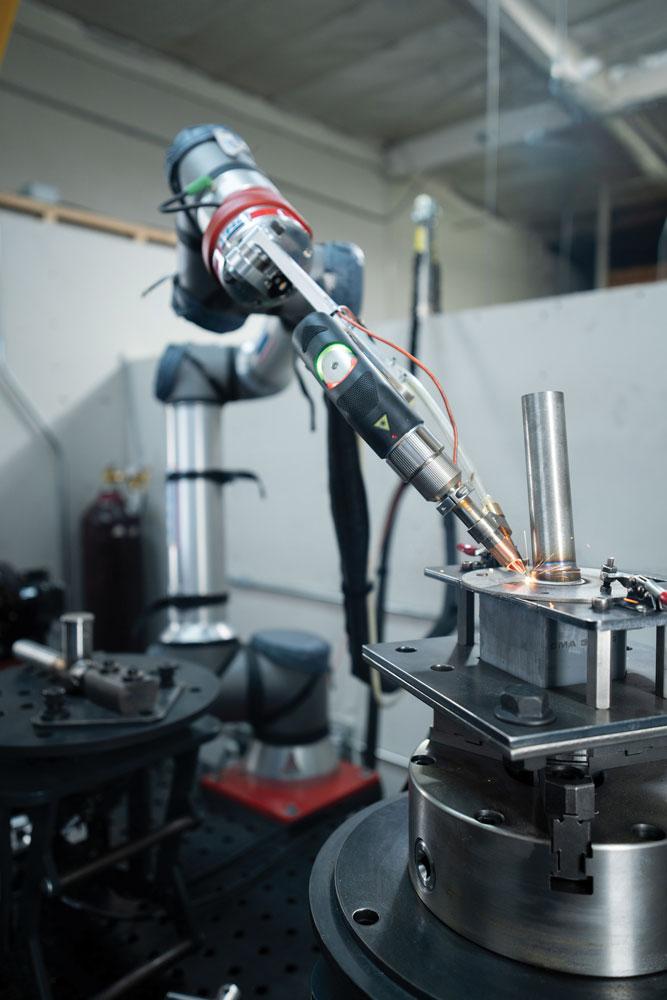
The manufacturing sector is witnessing a paradigm shift with the increasing adoption of collaborative robotic welding systems, often referred to as cobots. These systems are designed to work alongside human operators, enhancing productivity while ensuring safety. Unlike traditional robotic welders, which require significant safety barriers and space, cobots offer a more adaptable and space-efficient solution. This transition is driven by the need for more versatile and cost-effective manufacturing processes.
Collaborative robots are equipped with advanced sensors and software, allowing them to operate safely in close proximity to humans. This capability not only reduces the need for extensive safety measures but also enables manufacturers to optimize their floor space and reduce overhead costs. With the global market for collaborative robots expected to grow significantly over the next few years, companies are increasingly considering these systems as a viable investment to future-proof their operations.
What This Means for Your Business
For businesses in the architecture, engineering, construction, and manufacturing (AECM) sectors, the adoption of collaborative robotic welding offers several advantages. First, it provides a competitive edge by increasing production flexibility and efficiency. Cobots can be quickly reprogrammed for different tasks, allowing manufacturers to respond swiftly to changing market demands.
Additionally, the integration of collaborative robots can lead to substantial cost savings. By minimizing the need for extensive safety infrastructure and reducing downtime for reconfiguration, companies can achieve a higher return on investment. Furthermore, the use of cobots aligns with compliance requirements such as the Cybersecurity Maturity Model Certification (CMMC) and NIST standards, ensuring that businesses remain competitive in government contracting.
What US Operators Should Watch
US operators should closely monitor the evolving landscape of robotic welding technologies. Key areas to watch include advancements in sensor technology and artificial intelligence, which are critical for enhancing cobot functionality and safety. It's also essential to stay informed about federal funding opportunities and procurement windows that support the implementation of advanced manufacturing technologies.
Moreover, companies should prepare for potential regulatory changes that may arise as the use of collaborative robots becomes more widespread. Keeping track of compliance deadlines and audit dates related to cybersecurity and safety standards will be crucial for maintaining operational integrity and securing government contracts.
---
Source: https://www.canadianmetalworking.com/canadianfabricatingandwelding/article/automationsoftware/traditional-vs-collaborative-robotic-welding. Read the original story ->
Is your firm ready for what’s next?
VisioneerIT helps AECM and government contractors modernize operations, achieve compliance, and implement AI.
Explore VisioneerIT Solutions →