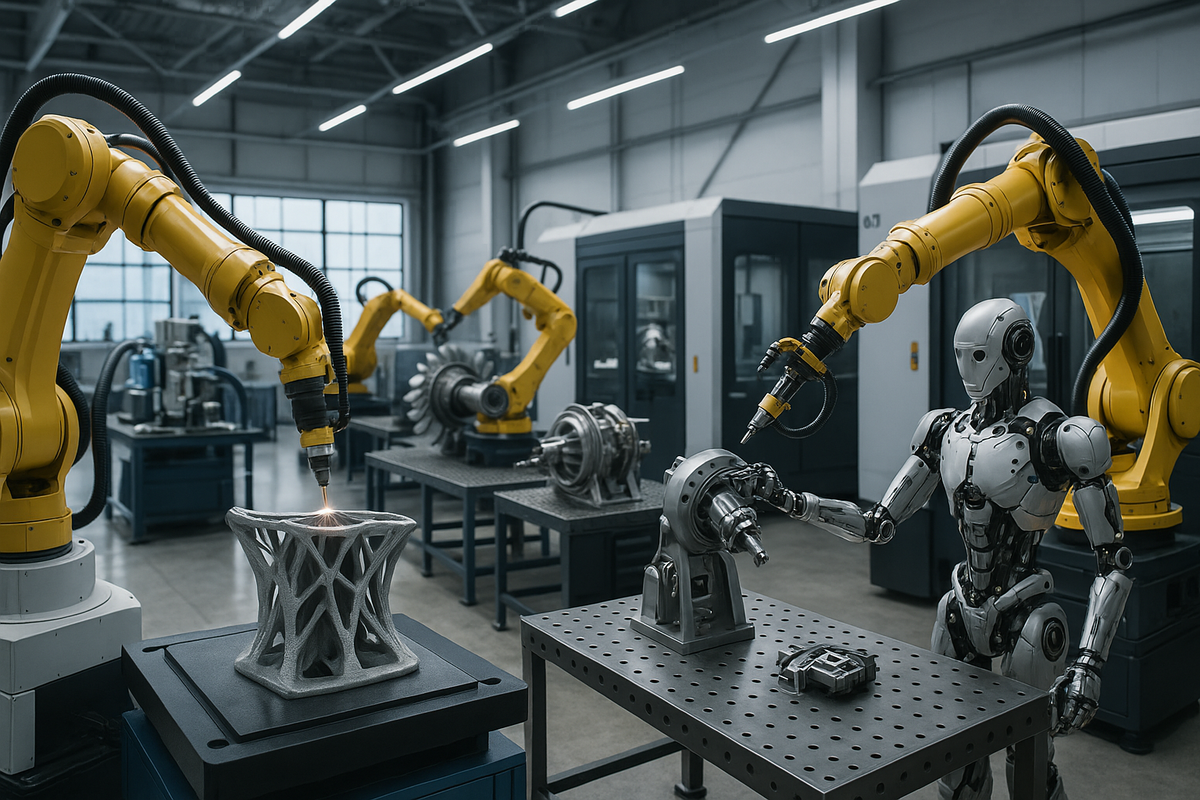
China's rapid expansion in 3D printing technology is reshaping the global landscape, particularly in the aerospace and robotics sectors. As the primary producer of over 90% of the world’s entry-level 3D printers, China is not only dominating manufacturing but also redefining international market dynamics.
What Happened
China has emerged as a powerhouse in the 3D printing industry, with its technological advances impacting global markets significantly. The country's focus on 3D printing has led to a substantial increase in production capabilities and technological sophistication. Chinese companies are leading in the development and deployment of 3D printing technologies that are now integral to the aerospace and robotics industries. This surge is marked by a strategic national agenda to enhance manufacturing capabilities and reduce dependency on foreign technologies. The global supply chain is witnessing a shift, as China exports advanced 3D printing systems and components, exerting influence over global manufacturing practices.
What This Means for Your Business
For U.S. companies operating in aerospace, robotics, and related fields, China's dominance in 3D printing presents both challenges and opportunities. Companies may face increased competition as Chinese firms leverage their cost advantages and technological prowess. However, there are also opportunities for collaboration and investment in Chinese technologies to enhance domestic capabilities. Businesses must assess their procurement strategies, considering potential dependencies on Chinese 3D printing technology. Additionally, staying compliant with evolving standards and regulations, such as CMMC and NIST, is crucial as the U.S. government continues to emphasize cybersecurity and supply chain security.
What US Operators Should Watch
U.S. operators need to monitor the evolving landscape of 3D printing regulations and standards, particularly those affecting aerospace and defense sectors. Keeping abreast of federal procurement windows and funding opportunities is essential for maintaining competitive positioning. Additionally, companies should track advancements in 3D printing technologies and consider strategic partnerships or investments to mitigate risks associated with China's growing influence in this space.
Is your firm ready for what’s next?
VisioneerIT helps AECM and government contractors modernize operations, achieve compliance, and implement AI.
Explore VisioneerIT Solutions →Tracking the right federal opportunities?
OryonIQ's AI platform monitors agency forecasts, contract awards, and procurement timelines — so government contractors always know what’s coming next.
Try OryonIQ Free →