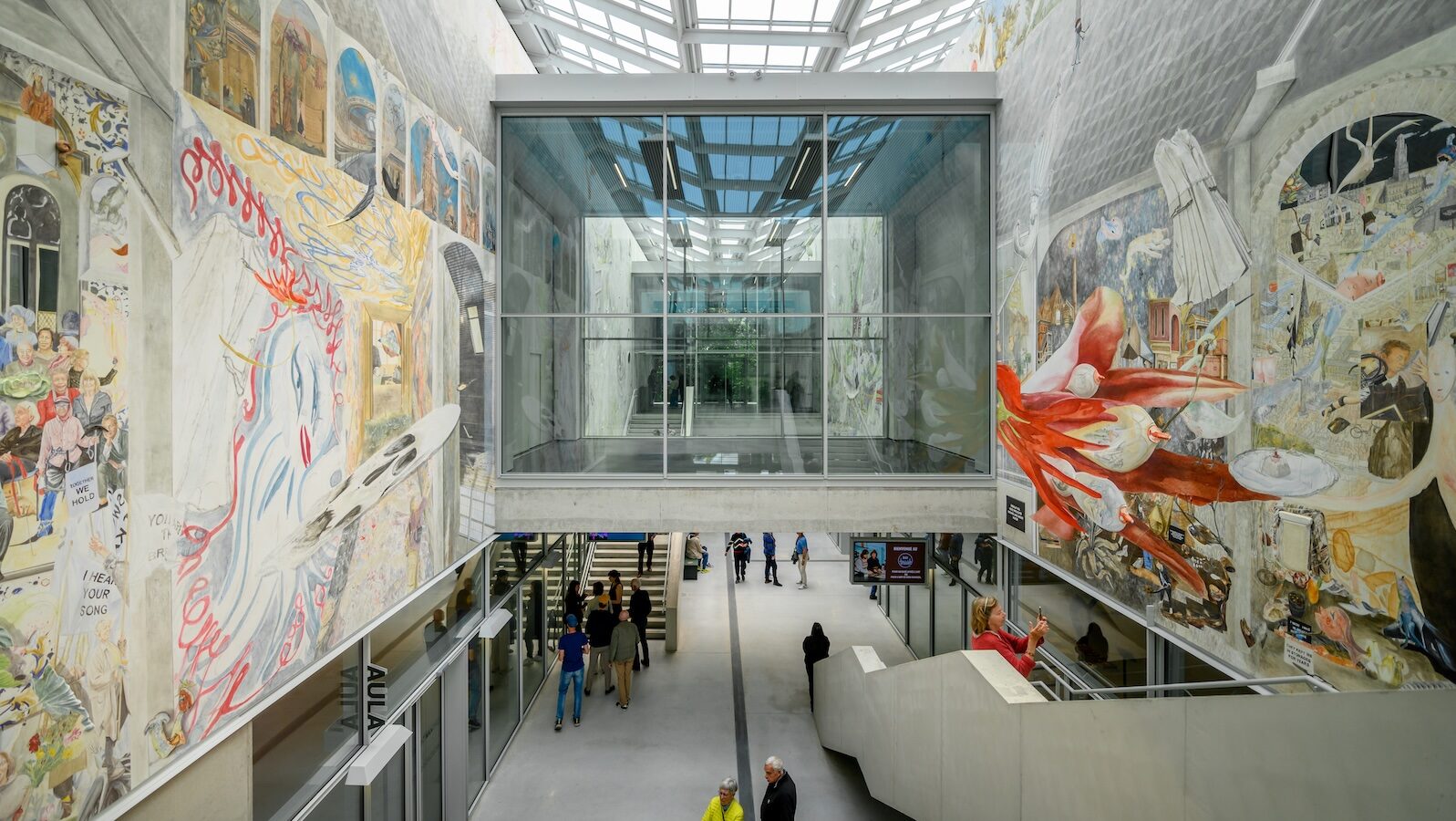
Belgium's BRUSK project in Bruges redefines cultural architecture, blending sustainability with urban heritage.
What Happened
The BRUSK project, a striking new exhibition hall, has opened in the historic center of Bruges, Belgium. This 9,500-square-metre building, designed by Robbrecht en Daem Architecten alongside Olivier Salens Architecten, merges innovative design with sustainable technology. The exhibition hall, which opened in May 2026, features a contemporary gabled roof with oversized dormer windows, and its facade is covered in dark green glass plates embedded with photovoltaic cells. This design not only enhances the building's aesthetic appeal but also supports its energy needs, providing both heating and cooling through a borehole thermal energy storage field.
The project occupies the site of a former school and includes the renovation of a 1930s educational building next door, which has been transformed into the BRON research center. The new public piazza in front of it further integrates the structure into the urban fabric. The Scala Grande, a central street within the building, guides visitors through the exhibition halls and connects to a future public park slated for completion in 2031.
What This Means for Your Business
The BRUSK project exemplifies a forward-thinking approach to cultural infrastructure, presenting valuable insights for AECM professionals. The integration of sustainable technologies like photovoltaic glass and borehole thermal energy storage can serve as a blueprint for future projects, especially in urban settings where space and heritage considerations are paramount. For firms involved in government contracting or public infrastructure projects, BRUSK highlights the importance of innovative design in securing stakeholder buy-in and achieving long-term operational efficiencies.
The project's success could influence procurement strategies, encouraging more emphasis on sustainable design and energy efficiency in public tenders. Additionally, the use of renewable energy solutions aligns with increasing compliance requirements around environmental standards and zero-emission targets, potentially reducing the long-term operational costs and enhancing the return on investment for similar projects.
What US Operators Should Watch
US operators should monitor the evolving landscape of sustainable architecture and the adoption of energy-efficient technologies in public projects. Keeping abreast of advancements in photovoltaic glass and thermal energy storage systems can provide competitive advantages in bidding for similar projects. Furthermore, as sustainability becomes a more significant factor in public procurement, understanding the compliance frameworks such as NIST and CMMC related to energy standards will be crucial.
Source: [Azure Magazine]. Read the original story ->
Is your firm ready for what’s next?
VisioneerIT helps AECM and government contractors modernize operations, achieve compliance, and implement AI.
Explore VisioneerIT Solutions →