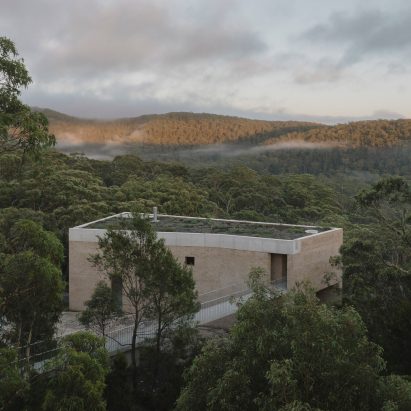
Bokey Grant's innovative design of the EA House in New South Wales, Australia, offers a pioneering approach to building in high-risk fire zones. This development is crucial for AECM professionals, as it combines sustainability with essential safety features, providing insights into resilient architecture amidst increasing environmental challenges.
What Happened
Architecture studio Bokey Grant has unveiled the EA House, a 170-square-metre monolithic structure set on the edge of a bushland escarpment in the Southern Highlands of New South Wales, Australia. Designed as a family home for Esther and Albert, the project is situated on land traditionally belonging to the Gundungurra people. The location is within a designated Flame Zone, an area at high risk for bushfires. This makes the house's design particularly noteworthy, as it employs low-tech solutions to enhance fire resistance and durability. The architects have focused on creating a sanctuary that is both experimental and firmly rooted in its environmental context, utilizing materials and methods that prioritize safety without sacrificing aesthetic appeal.
What This Means for Your Business
For AECM professionals, the EA House exemplifies a strategic shift towards integrating low-tech, resilient designs in areas prone to natural disasters. This approach not only aligns with sustainable building practices but also addresses increasing regulatory demands for fire safety in construction. The project demonstrates how innovative design can lead to competitive advantages in securing contracts within high-risk zones, offering a model for compliance with stringent safety standards. As global environmental conditions continue to shift, the ability to provide robust, adaptable solutions will be key for firms aiming to capture government and private sector contracts. Moreover, the EA House's emphasis on minimalistic, sustainable materials could reduce overall construction costs and improve ROI, particularly in areas requiring compliance with fire safety regulations.
What US Operators Should Watch
U.S. operators should monitor evolving fire safety regulations and standards, such as the National Fire Protection Association (NFPA) guidelines and updates to the International Building Code (IBC) that may influence future project requirements. Additionally, tracking advancements in sustainable building materials and techniques that enhance fire resistance will be critical. With increasing opportunities for government contracts focusing on disaster-resilient infrastructure, companies should prepare to meet these demands with innovative, compliant solutions. Staying ahead of these trends will position firms to successfully bid for projects in fire-prone regions, both domestically and internationally.
---
Source: https://www.dezeen.com/2026/07/17/bokey-grant-creates-low-tech-sanctuary-in-australian-flame-zone/
Is your firm ready for what’s next?
VisioneerIT helps AECM and government contractors modernize operations, achieve compliance, and implement AI.
Explore VisioneerIT Solutions →