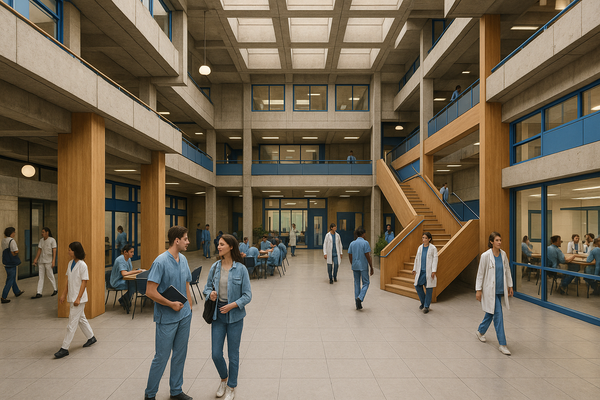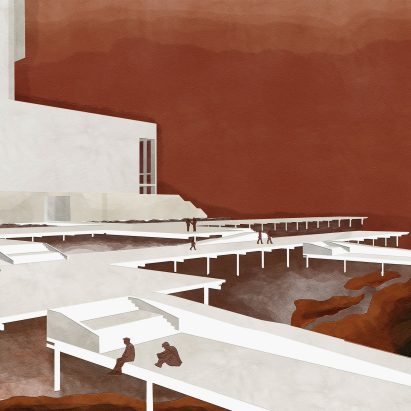
The adaptive reuse of a former thermal power plant north of Barcelona, spearheaded by students from Elisava, highlights a growing architectural trend towards sustainability and creative repurposing. This initiative is part of a series of projects that also includes innovative furniture design and urban micro-environments, reflecting a broader shift in architectural education towards practical and sustainable design solutions.
What Happened
The project at the heart of this initiative involves the transformation of a disused seaside thermal power plant into a vibrant community hub. The students from Elisava, a leading design and engineering school, have reimagined the industrial relic through detailed visualizations that preserve its historic character while integrating modern functionality. This project is part of a broader exhibition of student work that also features a series of furniture defined by taut cables and a modular system of ceramic and wood objects designed for urban settings.
What This Means for Your Business
For AECM professionals, the adaptive reuse of the Barcelona power plant underscores the potential for repurposing existing structures to meet contemporary needs, aligning with sustainability goals and potentially reducing costs associated with new builds. The focus on innovative materials and modular designs presents opportunities to enhance project flexibility and efficiency, particularly in urban environments where space and resources are limited. Contractors and designers can draw inspiration from these projects to explore new business models and partnerships, tapping into the burgeoning market for sustainable and adaptive architecture.
What US Operators Should Watch
As adaptive reuse gains traction, US operators should monitor developments in related regulations and incentives that support sustainable building practices. The growing emphasis on sustainability in architecture may lead to increased federal funding opportunities for projects that prioritize environmental impact. Additionally, keeping abreast of advances in modular and adaptive design technologies will be crucial for maintaining competitive positioning in the evolving construction landscape.
Source: Dezeen. Read the original story ->
Is your firm ready for what’s next?
VisioneerIT helps AECM and government contractors modernize operations, achieve compliance, and implement AI.
Explore VisioneerIT Solutions →