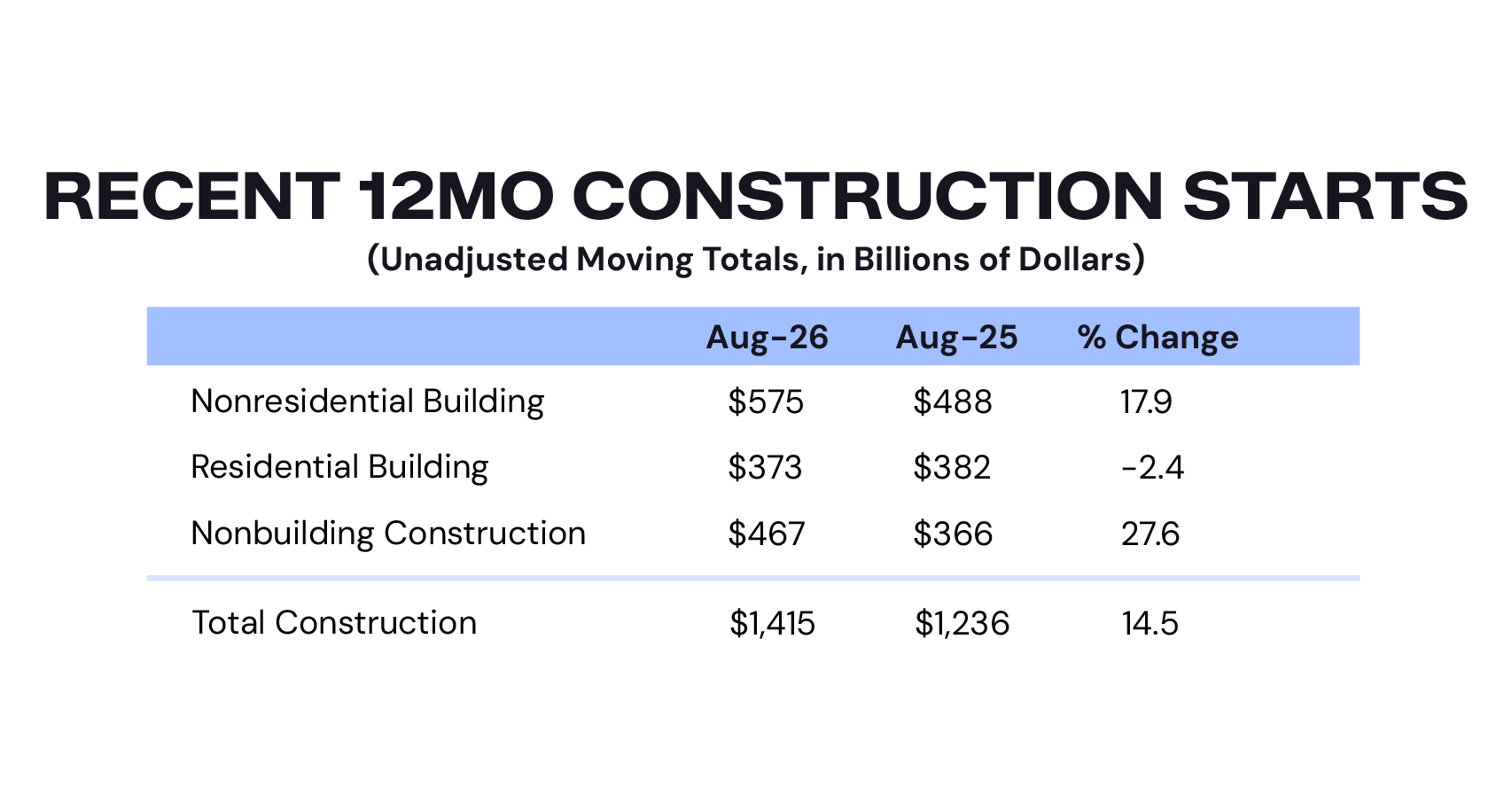
Total construction starts experienced a significant downturn in August, plummeting by 24.8% to a seasonally adjusted annual rate of $1.34 trillion, according to recent data from the Dodge Construction Network. This decline is particularly noteworthy for its breadth, impacting nonresidential, residential, and nonbuilding sectors, and presents a crucial moment for stakeholders within the architecture, engineering, construction, and manufacturing (AECM) industries.
What Happened
In August, the construction industry saw a substantial reduction in activity, with nonresidential building starts suffering the most pronounced decline at 32.0%. This category encompasses commercial, industrial, and institutional projects, which are often key drivers of economic growth and urban development. Residential construction starts also fell, albeit less severely, by 5.2%. The nonbuilding sector, which includes infrastructure projects such as roads and bridges, also experienced a downturn. This broad-based decline suggests a potential cooling in the construction sector, which could have ripple effects across related industries.
What This Means for Your Business
For businesses operating within the AECM sectors, this decline signals potential challenges in securing new contracts and maintaining project pipelines. The drop in nonresidential starts may particularly affect firms that specialize in commercial and industrial projects. Companies should prepare for increased competition for fewer available projects and consider diversifying their service offerings to mitigate risks. Compliance with federal standards, such as CMMC and NIST, remains critical as government contracts continue to provide vital opportunities amidst a shrinking private sector market. Firms must also stay vigilant about cost management and ROI to navigate this period of contraction effectively.
What US Operators Should Watch
Industry professionals should closely monitor federal funding initiatives and infrastructure bills that could counterbalance private sector declines. Upcoming procurement windows and regulation timelines will be crucial for maintaining a competitive edge. Staying informed about federal deadlines for infrastructure projects and potential policy shifts related to construction and urban development will be essential. Additionally, operators should prepare for potential CMMC audits and ensure compliance to capitalize on government contracting opportunities.
Source: https://www.constructionbusinessowner.com/27006-2/. Read the original story ->
Is your firm ready for what’s next?
VisioneerIT helps AECM and government contractors modernize operations, achieve compliance, and implement AI.
Explore VisioneerIT Solutions →