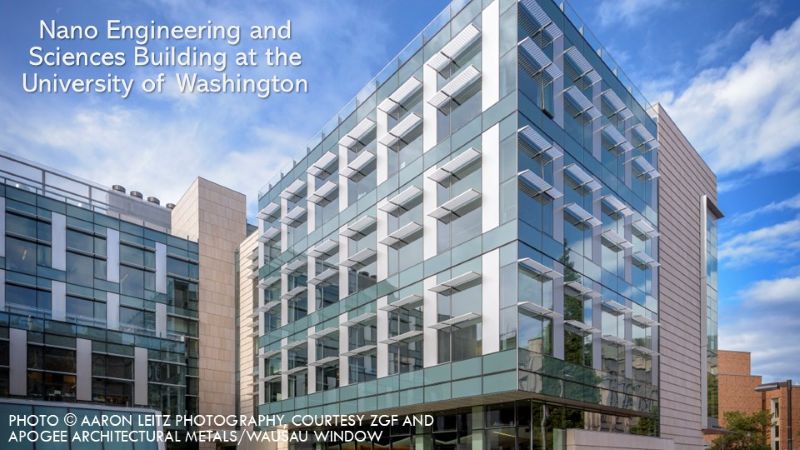
The University of Washington’s Nano Engineering and Sciences Building in Seattle exemplifies the growing trend of integrating aluminum sunshades into building designs. As the demand for energy-efficient and sustainable construction grows, aluminum sunshades have become a staple in projects across all U.S. climate zones, from educational institutions to corporate offices.
What Happened
Aluminum sunshades are gaining traction as a versatile architectural feature that balances aesthetics with performance. The Nano Engineering and Sciences Building, designed by ZGF, showcases how aluminum sunshades can be harmoniously integrated with other facade elements to achieve both visual appeal and functional performance. These sunshades are no longer confined to warm climates; they are now a common feature in diverse environments, addressing the need for energy efficiency, occupant comfort, and the use of sustainable materials.
Aluminum is an ideal material for sunshades due to its properties. It can be extruded into various shapes like tubular, airfoil, or Z-shaped blades, allowing for customization to complement different facade styles. The durability of aluminum, combined with high-performance coatings that meet AAMA 2605 and AAMA 611 standards, ensures long-term resistance to weather and UV degradation. Furthermore, aluminum’s lightweight nature simplifies shipping and installation, while its recyclability supports sustainability goals.
What This Means for Your Business
For businesses in architecture, engineering, and construction, the rise of aluminum sunshades presents an opportunity to enhance building performance while meeting sustainability criteria. The material’s durability and recyclability align with LEED certification and other green building standards, potentially reducing lifecycle costs and enhancing ROI. The ability to customize sunshades to match or contrast with building facades offers additional value in terms of design flexibility.
AECM firms should consider the growing emphasis on sustainability in federal and private sector projects. Incorporating aluminum sunshades can improve competitive positioning, particularly in bids that prioritize energy efficiency and green building certifications. Additionally, understanding the compliance requirements for coatings and finishes, as specified by FGIA standards, is crucial for ensuring product longevity and client satisfaction.
What US Operators Should Watch
Decision-makers should monitor developments in solar control technologies and material innovations. As sustainability becomes a key differentiator in procurement, staying informed about new certifications, such as Environmental Product Declarations and Declare Labels, will be essential. Tracking updates in FGIA standards and advancements in daylight simulation software can provide a competitive edge in designing efficient and sustainable buildings.
The evolving landscape of federal funding for sustainable construction projects also presents opportunities. Companies should be prepared to leverage these initiatives by integrating aluminum sunshades into their project proposals, enhancing both environmental performance and aesthetic appeal.
Source: Metal Construction News. Read the original story ->
Is your firm ready for what’s next?
VisioneerIT helps AECM and government contractors modernize operations, achieve compliance, and implement AI.
Explore VisioneerIT Solutions →