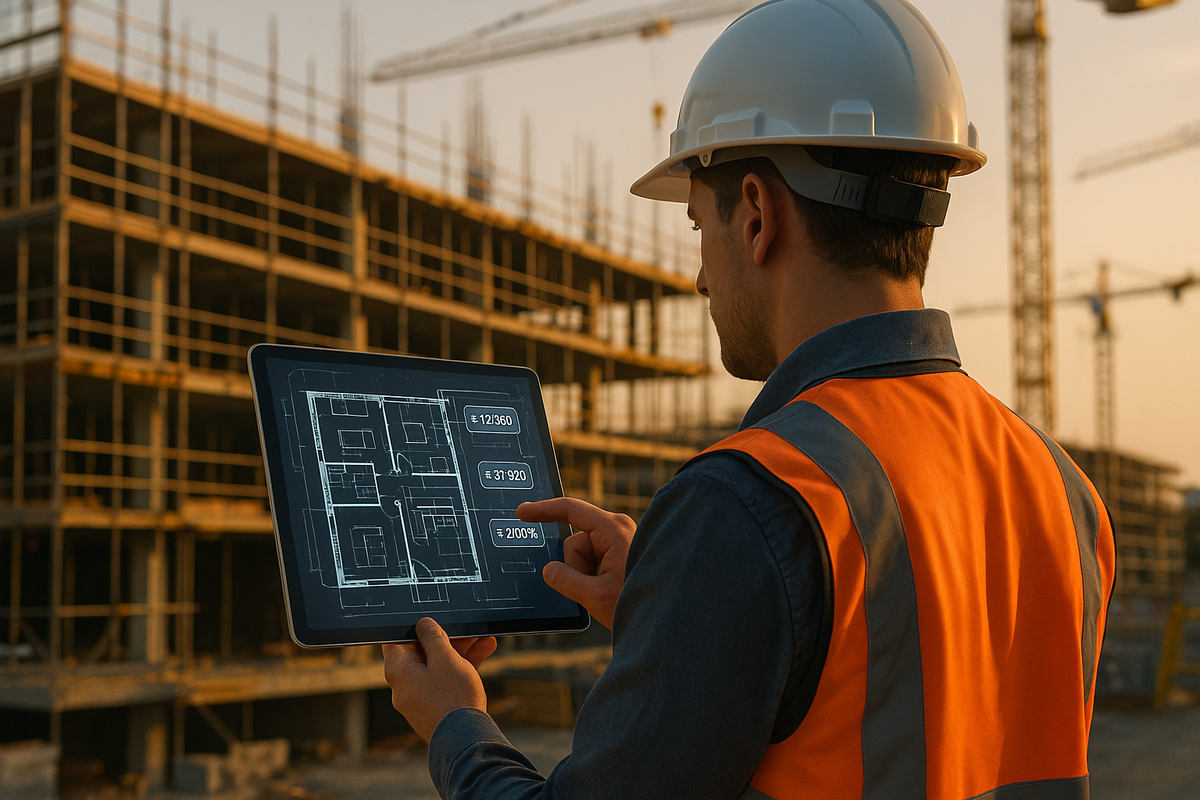
Artificial intelligence is revolutionizing the construction industry, particularly in the realm of pre-construction workflows. Estimators, traditionally tasked with calculating costs and preparing bids, are now positioned at the forefront of innovation. This shift is not diminishing their roles but rather expanding them, as AI tools become integral to bidding processes.
What Happened
AI technology is increasingly adopted in construction bidding workflows, reshaping the role of estimators rather than reducing it. Companies like Attentive.ai are leading the charge by integrating AI into pre-construction processes. These tools enhance estimators' capabilities by automating repetitive tasks, improving accuracy, and providing data-driven insights. The technology allows estimators to focus on strategic decision-making rather than manual calculations.
The introduction of AI in bidding processes is part of a broader digital transformation in construction. AI tools can analyze vast datasets to forecast costs more accurately and identify potential risks earlier. This shift not only enhances efficiency but also increases competitiveness in securing contracts. As of 2023, more firms are investing in AI solutions, recognizing the potential to streamline operations and improve margins.
Why It Matters for the AECM Industry
For professionals in the Architecture, Engineering, Construction, and Manufacturing (AECM) sectors, embracing AI in bidding workflows can lead to significant benefits. AI tools can reduce the time required to prepare bids, allowing companies to respond more quickly to RFPs and improve their chances of winning projects. This efficiency can be crucial in a competitive market where speed and accuracy are paramount.
Furthermore, AI-driven insights can help estimators identify cost-saving opportunities and optimize resource allocation. This capability is particularly beneficial in managing supply chain disruptions and fluctuating material costs, which have been prevalent in recent years. By leveraging AI, companies can mitigate risks and ensure more predictable project outcomes.
The expansion of the estimator's role also means that professionals need to develop new skills, such as data analysis and AI tool proficiency. This evolution requires ongoing training and adaptation, but it also opens up new career opportunities within the industry.
What's Next
As AI continues to integrate into construction workflows, industry professionals should anticipate further innovations in AI applications. Upcoming advancements may include more sophisticated predictive analytics and machine learning algorithms capable of handling increasingly complex datasets. Companies should prepare for these changes by investing in AI training programs and updating their technology infrastructure.
The next few years will likely see more widespread adoption of AI tools across the construction industry, with regulatory bodies potentially setting new standards for AI use in project bidding and execution. Professionals should stay informed about these developments to maintain a competitive edge and contribute to the industry's ongoing transformation.
Is your firm ready for what’s next?
VisioneerIT helps AECM and government contractors modernize operations, achieve compliance, and implement AI.
Explore VisioneerIT Solutions →