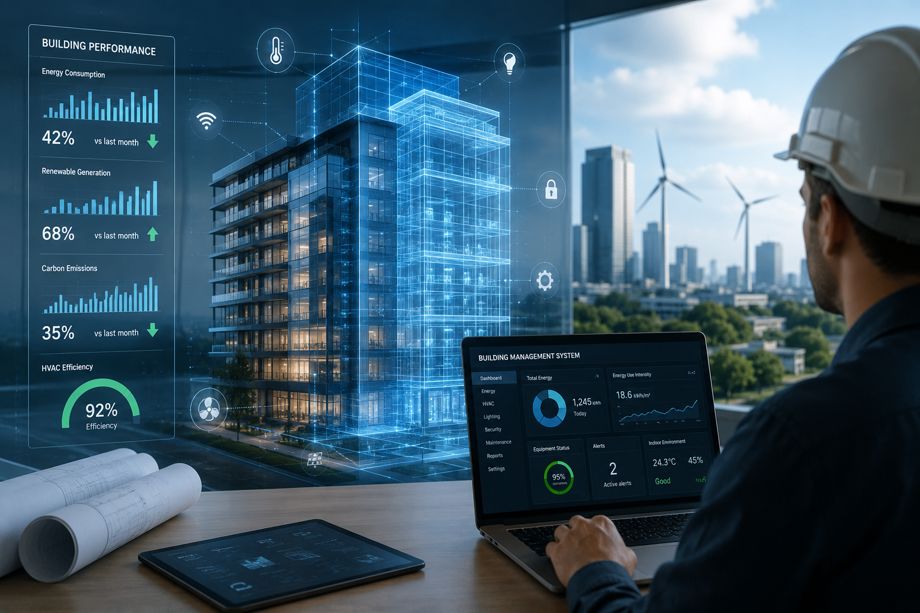
AI-driven digital twin technology is poised to redefine sustainable urban energy systems by optimizing energy use and enhancing renewable energy integration. With global energy demands rising and climate-related risks escalating, this technological advancement has never been more crucial.
What Happened
Digital twin technology, a sophisticated tool for creating virtual replicas of physical buildings, is emerging as a key enabler in the pursuit of net-zero energy buildings (NZEBs). A comprehensive international review conducted by researchers from Sunway University, Korea University, Fahad Bin Sultan University, Western Sydney University, and the University of Technology Sydney underscores the transformative potential of digital twins in reducing energy consumption and supporting decarbonization efforts.
The study highlights that digital twins enable continuous monitoring, predictive analytics, and automated decision-making, which are essential for optimizing energy efficiency. For instance, a digital twin-enabled building upgrade resulted in a 14.1% reduction in annual energy costs, a 24.13% increase in solar energy generation, and a reduction of 4,306 kg of CO2 emissions annually. Additionally, a Rome-based residential district utilizing digital twin systems achieved 70% renewable energy utilization, showcasing the technology's potential to significantly increase clean-energy penetration.
What This Means for Your Business
For businesses and government contractors in the architecture, engineering, construction, and manufacturing (AECM) sectors, the integration of digital twin technology presents substantial opportunities. The ability to optimize building performance and reduce operational costs through predictive maintenance and demand-response incentives could enhance competitive positioning. As electricity markets shift towards dynamic pricing, digital twins offer a strategic advantage by enabling operators to reduce energy bills by 8% to 18% and increase demand-response incentives by 12% to 31%.
Furthermore, the economic implications are significant. Germany's digital twin market is projected to reach approximately €267 billion, reflecting broader economic transformations driven by Industry 4.0 and digital infrastructure i
Partner Insight · VisioneerIT
Digital twin technology is transforming urban energy systems by enhancing efficiency and sustainability. VisioneerIT offers comprehensive solutions integrating IoT sensors and real-time analytics for optimized infrastructure management.
Explore VisioneerIT Digital Twin Solutions →
Is your firm ready for what’s next?
VisioneerIT helps AECM and government contractors modernize operations, achieve compliance, and implement AI.
Explore VisioneerIT Solutions →