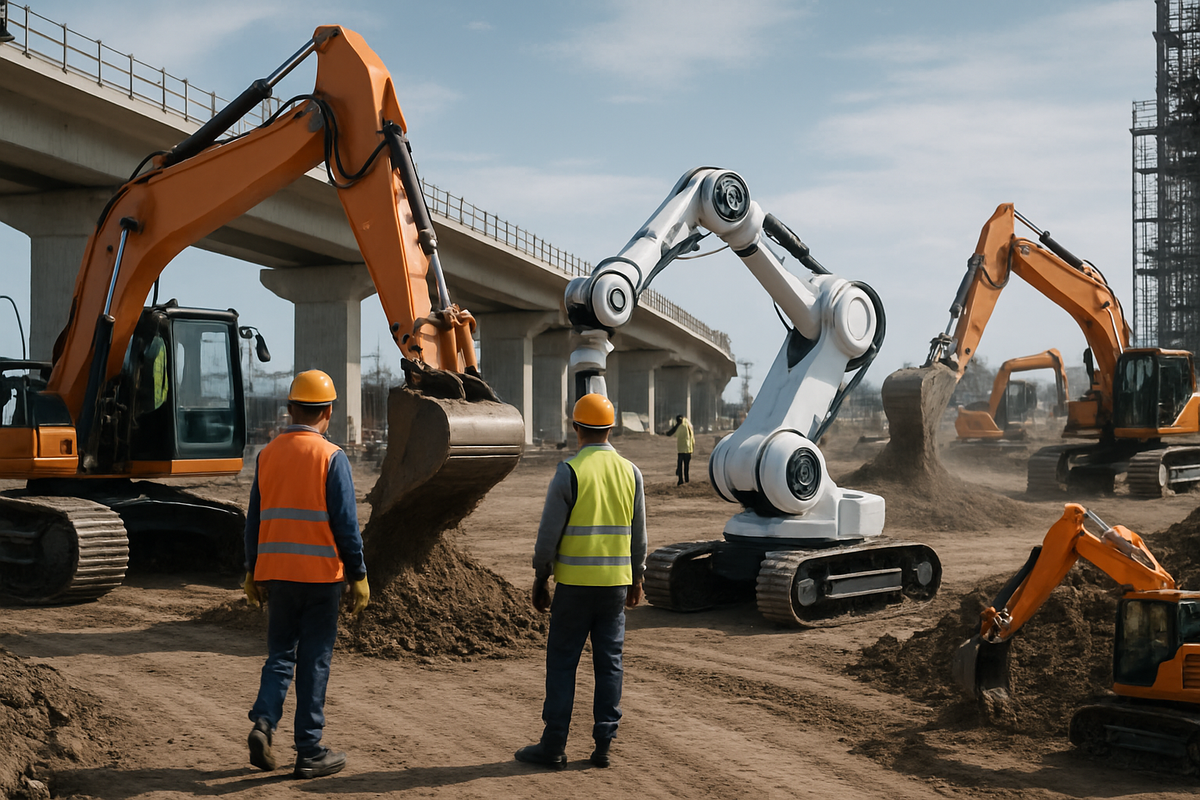
Artificial Intelligence (AI) is breaking new ground in the construction industry, moving from pilot projects to active field applications. This advancement is crucial as it addresses the longstanding issue of pilot programs stalling before full implementation. As complex construction projects demand more efficiency and precision, AI offers solutions that can significantly optimize operations.
What Happened
AI initiatives in construction have historically struggled to move beyond the pilot stage, not due to the inadequacy of the AI models themselves, but because of implementation hurdles. Construction companies are now shifting their focus to integrating AI into day-to-day operations, driven by the need for enhanced productivity and reduced costs. This transition involves adopting AI tools in project management, site monitoring, and predictive analytics to streamline processes and improve decision-making.
Why It Matters for the AECM Industry
The integration of AI into the construction industry presents a strategic advantage in several areas. First, AI can lead to cost savings by minimizing errors and optimizing resource allocation. AI-driven predictive analytics can foresee potential issues, allowing teams to address them proactively rather than reactively. Additionally, AI enhances safety through real-time monitoring and risk assessment, reducing workplace accidents. For project managers and engineers, AI tools can offer better insights into project timelines and resource management, thus improving overall project delivery.
What's Next
As AI becomes more entrenched in construction processes, professionals should watch for developments in AI technology that offer even greater integration capabilities. Upcoming milestones include advancements in machine learning algorithms that further enhance predictive capabilities and AI's role in sustainability through efficient energy use and waste reduction. Industry stakeholders should also prepare for policy developments that could impact AI adoption, such as data privacy regulations and standards for AI system transparency.
Is your firm ready for what’s next?
VisioneerIT helps AECM and government contractors modernize operations, achieve compliance, and implement AI.
Explore VisioneerIT Solutions →