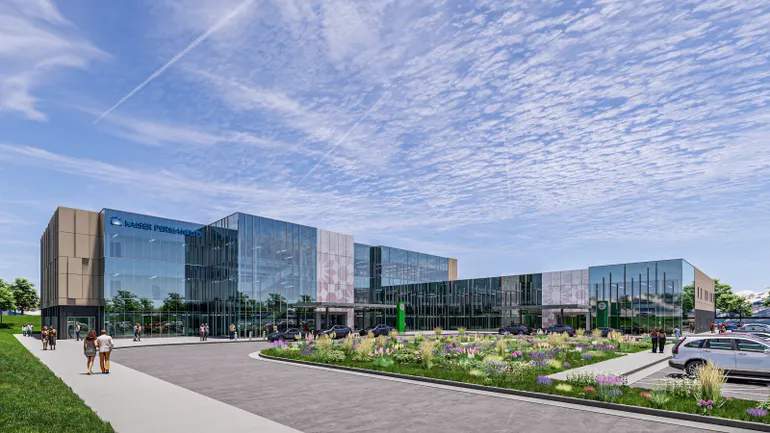
Artificial intelligence is reshaping the landscape of healthcare construction at a pivotal time, according to industry veteran Hamilton Espinosa of DPR Construction. With healthcare projects being one of the few growth areas in construction, AI offers the potential to mitigate rising costs and enhance operational efficiencies, making it a critical tool for industry stakeholders.
What Happened
In a recent discussion, Hamilton Espinosa, co-leader of DPR Construction’s healthcare segment, highlighted the transformative role of AI in healthcare construction. Despite a challenging market, healthcare construction remains robust, with AI playing a crucial role in maintaining this momentum. DPR Construction’s white paper emphasizes the importance of AI in redefining healthcare workflows, suggesting that AI can streamline operations such as diagnosis transcription and logistics management, ultimately impacting facility design and construction processes.
Espinosa noted that AI is enhancing the predictability of healthcare projects, offering improved cost and schedule control. Technologies like automated guided vehicles require design adaptations to accommodate wider corridors and additional elevators, while AI-driven tools allow for more efficient floor layout planning and clash detection before construction begins. Additionally, DPR is employing cutting-edge technology such as Dusty Robotics’ automated layout solutions, which significantly expedite and improve the accuracy of interior wall and ductwork placement.
What This Means for Your Business
For business leaders in the AECM sector, the integration of AI in healthcare construction presents significant opportunities for cost savings and efficiency improvements. AI’s ability to enhance project predictability and control can lead to more successful project outcomes, particularly in managing the complex requirements of healthcare facilities. As federal funding and private investments continue to flow into healthcare infrastructure, leveraging AI can provide a competitive edge in securing contracts and optimizing project delivery.
Moreover, AI’s impact extends to compliance and safety, with technologies like RFID tracking improving workforce management and site safety. This aligns with broader industry trends towards adopting compliance frameworks such as the Cybersecurity Maturity Model Certification (CMMC) and NIST standards, where AI can play a role in ensuring adherence to regulatory requirements.
What US Operators Should Watch
As AI continues to evolve, US operators should closely monitor advancements in construction technology and their implications for project design and execution. With rising costs posing a challenge, particularly in the healthcare sector, staying informed about AI-driven solutions that offer cost and efficiency benefits will be crucial. Additionally, operators should keep an eye on procurement windows and federal funding opportunities that support AI integration in construction projects. Understanding the impact of AI on compliance and safety standards will also be vital, as these factors increasingly influence project success and competitiveness.
Source: Construction Dive. Read the original story ->
Partner Insight · VisioneerIT
The integration of AI in healthcare construction aligns with the broader trend of digital modernization in the AECM sector. VisioneerIT specializes in engineering enterprise-grade software solutions that can enhance operational efficiencies and support the evolving needs of construction projects.
Explore VisioneerIT Cybersecurity →
Is your firm ready for what’s next?
VisioneerIT helps AECM and government contractors modernize operations, achieve compliance, and implement AI.
Explore VisioneerIT Solutions →