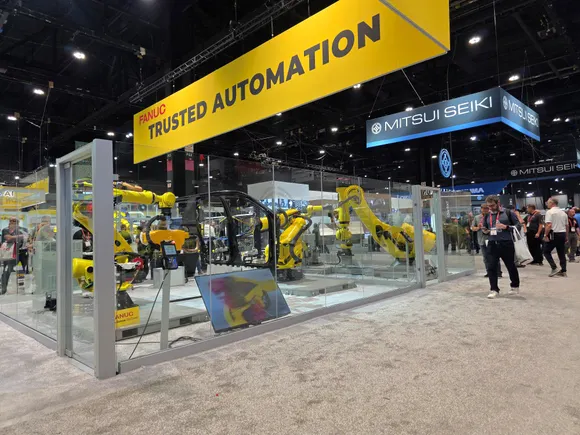
In a rapidly evolving manufacturing landscape, the demand for automation and artificial intelligence (AI) is surging as industries grapple with severe labor shortages. This shift was highlighted by Chris Chidzik, principal economist at the Association for Manufacturing Technology (AMT), during the 2026 International Manufacturing Technology Show (IMTS) in Chicago.
What Happened
The manufacturing sector is experiencing a significant transformation as automation and AI technology adoption accelerates. According to Chris Chidzik, the demand for automation is "off the charts," primarily driven by the persistent labor shortages affecting manufacturers across the United States. Chidzik noted that there are currently between 400,000 and 500,000 open positions in the manufacturing sector. As demand on U.S. manufacturers continues to rise, automation is increasingly seen as the only viable solution to meet production needs.
A PwC survey of 443 industrial manufacturing executives predicts that manufacturers will more than double their use of automation, AI, and other advanced technologies by 2030. The survey indicates that the adoption of these technologies is expected to rise from 26% to 68% over the next five years. However, the path to full automation remains challenging. Brian Gerkey, CTO of Intrinsic, pointed out that 80% of U.S. manufacturing facilities currently have zero automation, contrasting starkly with the highly automated factories in countries like China and Japan.
Chidzik emphasized that measuring automation's impact has evolved, citing the example of CNC control and automatic tool changers, which have become standard features in modern manufacturing. He suggested that the true impact of automation can be gauged by comparing the general inflation rate with the average order value, indicating that demand for automation in 2025 was approximately four times higher than in 2018.
What This Means for Your Business
For U.S. AECM professionals, the growing reliance on automation and AI presents both challenges and opportunities. As federal incentives and private investments in automation technologies increase, companies that adapt quickly could secure a competitive edge. The integration of AI and automation can enhance operational efficiency, reduce production costs, and improve supply chain resilience.
However, firms must also navigate new compliance requirements, such as adhering to cybersecurity frameworks like the Cybersecurity Maturity Model Certification (CMMC) and NIST standards. As automation becomes more prevalent, ensuring data security and maintaining regulatory compliance will be critical.
The shift towards automation also underscores the importance of workforce development. Companies should invest in training programs to equip their workforce with the necessary skills to operate and maintain advanced manufacturing technologies.
What US Operators Should Watch
Manufacturers should closely monitor federal funding opportunities and procurement windows related to automation and AI technologies. Staying informed about upcoming regulation timelines, such as CMMC audit dates, will be essential for maintaining compliance.
Additionally, tracking advancements in automation and AI solutions will help companies make informed investment decisions. As the adoption of these technologies accelerates, staying ahead of industry trends will be crucial for maintaining a competitive position in the market.
Partner Insight · VisioneerIT
The integration of automation and AI in manufacturing aligns with the need for digital modernization in various sectors. VisioneerIT specializes in software engineering that can support the transition to automated systems and enhance operational efficiency.
Explore VisioneerIT Cybersecurity. →
Is your firm ready for what’s next?
VisioneerIT helps AECM and government contractors modernize operations, achieve compliance, and implement AI.
Explore VisioneerIT Solutions →