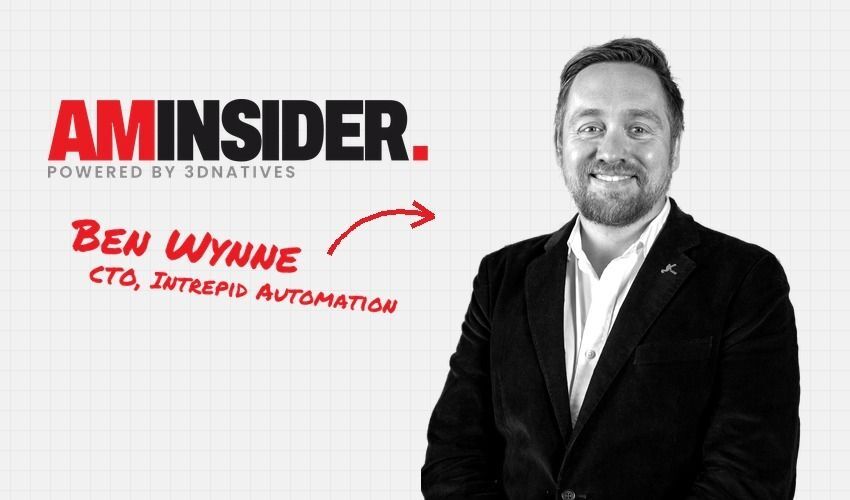
Ben Wynne, the Chief Technology Officer of Intrepid Automation, has raised critical questions about the feasibility of additive manufacturing (AM) for large-scale industrial production. His insights, shared on AMinsider, challenge the prevailing enthusiasm surrounding 3D printing technologies, urging industry players to reassess their expectations and strategies.
What Happened
Ben Wynne, in a detailed discussion on AMinsider, emphasized the current limitations faced by additive manufacturing in scaling up to meet industrial demands. According to Wynne, while 3D printing offers significant benefits in terms of customization and prototyping, its transition to mass production environments is fraught with challenges. These include issues related to speed, cost-efficiency, and material limitations that prevent AM from fully replacing traditional manufacturing methods on a large scale. Wynne argues that despite technological advancements, the promise of AM as a universal solution for industrial-scale production remains overstated.
What This Means for Your Business
For AECM professionals and government contractors, Wynne’s insights suggest a need for cautious investment in additive manufacturing. While AM can undoubtedly enhance prototyping and bespoke manufacturing, relying on it for mass production could lead to operational inefficiencies and increased costs. Businesses should evaluate their manufacturing strategies, considering hybrid approaches that integrate traditional methods with AM to optimize production processes. Compliance officers should also be mindful of the regulatory landscape surrounding AM, which may impact procurement strategies and contract negotiations, especially in sectors reliant on high-volume manufacturing.
What US Operators Should Watch
US operators should monitor advancements in AM technology that address current scalability challenges. Staying informed about developments in material science and printing technologies will be crucial. Additionally, businesses should keep an eye on any changes in federal regulations that could affect the adoption of AM in government contracts. Understanding these dynamics will be key to maintaining a competitive edge and ensuring compliance with evolving industry standards.
Source: https://www.3dnatives.com/en/aminsider-ben-wynne-24112026/. Read the original story ->
Is your firm ready for what’s next?
VisioneerIT helps AECM and government contractors modernize operations, achieve compliance, and implement AI.
Explore VisioneerIT Solutions →