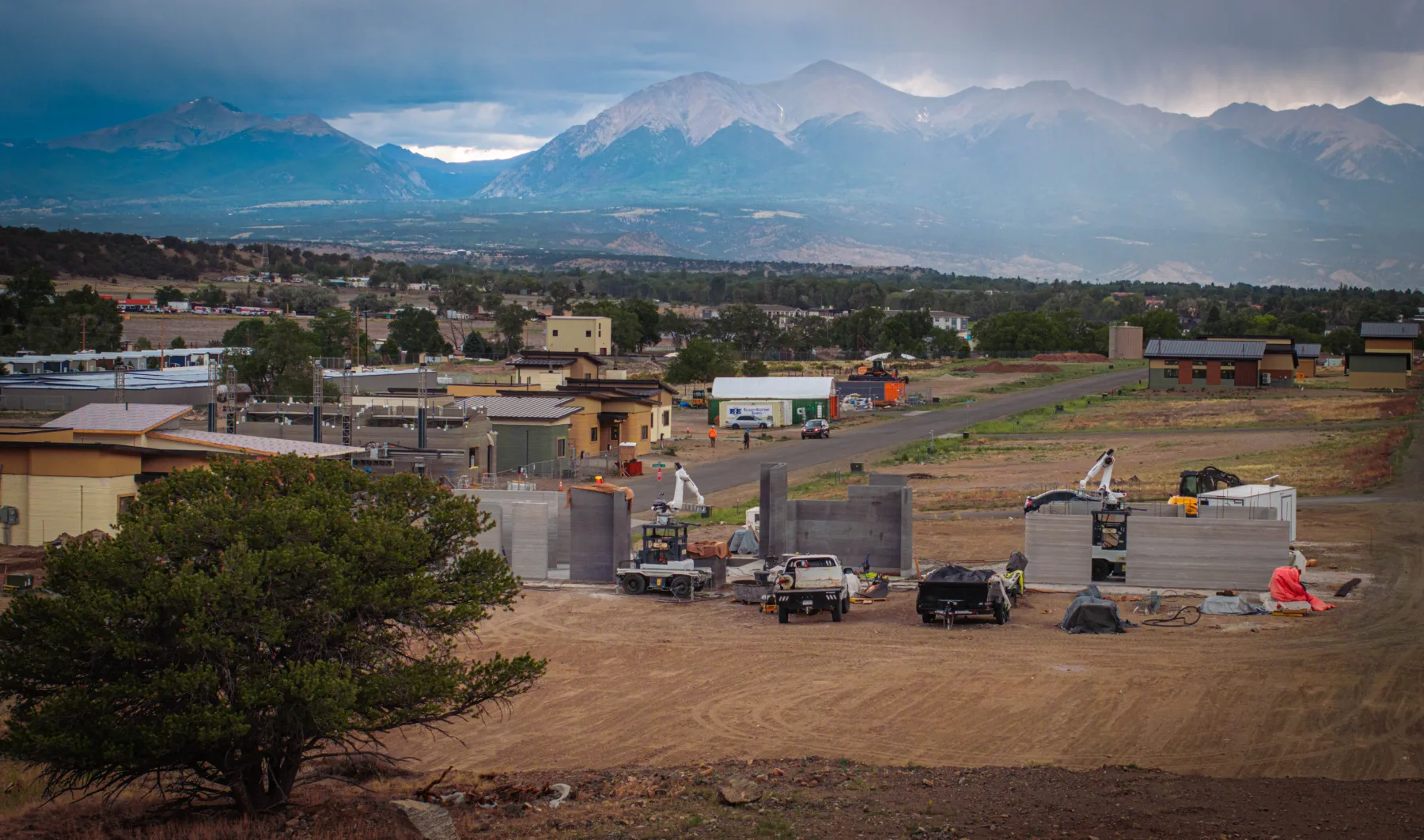
Construction in Salida, Colorado, is witnessing a groundbreaking initiative with the Cleora development, a 55-acre project poised to become the world's largest planned 3D-printed residential community. As of July 2026, with infrastructure complete and seven homes already built, Cleora is moving from concept to reality, showcasing the potential of 3D-printing technology to revolutionize housing at scale. For stakeholders in the architecture, engineering, and construction management (AECM) industry, this project represents a significant leap toward addressing labor shortages and enhancing construction efficiency through advanced robotics.
What Happened
The Cleora development, in partnership with True North and RIC Robotics, is pioneering a new era in residential construction. The project plans to include 106 residences, with more than 65 homes utilizing RIC Robotics' construction robotics and 3D-printing technology. This initiative positions Cleora as one of the most extensive deployments of robotic construction technology within a single residential development in the United States. Two autonomous RIC Robotics printing systems are currently operational on the site, facilitating this ambitious construction effort.
Greg Kenny, Managing Partner of Cleora, emphasized the project's goal to demonstrate that robotics can fundamentally transform community design and delivery. The initiative follows nearly seven years of research into construction technologies and scalable housing solutions. By integrating robotics into large-scale housing, Cleora aims to establish a model for future developments, addressing industry challenges such as labor availability and long-term scalability.
What This Means for Your Business
For AECM professionals, Cleora presents a blueprint for leveraging robotics in large-scale residential projects. The use of 3D-printing technology can significantly reduce construction times and costs, offering a competitive edge in the housing market. The project also aligns with sustainability goals, as 3D-printed homes often require fewer materials and generate less waste compared to traditional construction methods.
Moreover, the partnership with RIC Robotics highlights the importance of selecting the right technology partners to achieve efficient and scalable construction solutions. As the industry faces pressure to innovate and meet growing housing demands, embracing such cutting-edge technologies could offer significant ROI and position companies favorably in a competitive landscape.
What US Operators Should Watch
Industry stakeholders should monitor Cleora's progress as a case study in integrating robotics into residential construction. Key timelines include the completion of True North's first model home shell this month, signaling the project's advancement. Additionally, the collaboration with Colorado Mountain College to provide workforce development opportunities underscores the importance of fostering a skilled workforce adept in robotics and 3D-printing technologies.
As the Cleora project unfolds, AECM professionals should consider how similar technologies could be implemented in their operations to enhance efficiency, reduce costs, and meet the evolving demands of the housing market.
---
Source: https://zweiglist.com/robotics-advances-construction-at-the-worlds-largest-planned-3d-printed-township/. Read the original story ->
Is your firm ready for what’s next?
VisioneerIT helps AECM and government contractors modernize operations, achieve compliance, and implement AI.
Explore VisioneerIT Solutions →