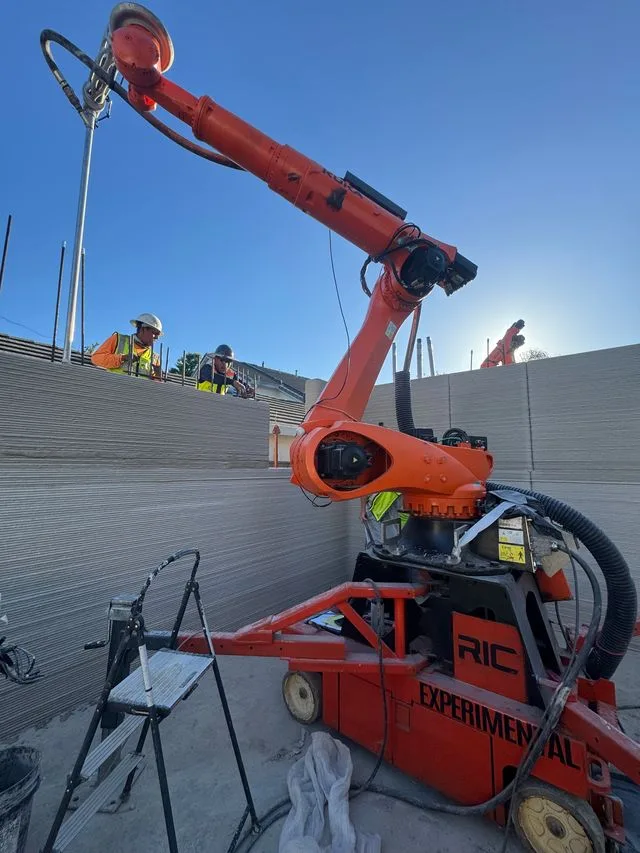
RIC Robotics and K4K Construction have achieved a landmark in residential construction by completing Sacramento's first permitted 3D concrete-printed home. This development is pivotal as it marks a transition from experimental to practical application of autonomous construction technologies in the U.S. housing market.
What Happened
The project involves a 1,200-square-foot accessory dwelling unit (ADU) created in just 12 days using RIC Robotics’ autonomous construction technology. This rapid construction method not only meets seismic compliance but also establishes a precedent for future projects in the region. The collaboration between RIC Robotics and K4K Construction resulted in the first-ever permitting pathway for 3D concrete-printed residences in Sacramento, setting a framework that could revolutionize residential development processes.
The project carries personal significance for K4K Construction's founder, David Gonzalez, who spearheaded the initiative to build the ADU for his own family. This hands-on approach not only tested the technology but also served as a proof of concept that demonstrated the ability of 3D printing to meet rigorous residential standards.
What This Means for Your Business
For AECM professionals, this development signifies a transformative shift in construction practices. The ability to complete a code-compliant structure in a fraction of the traditional time could drastically reduce labor costs and address persistent labor shortages. Moreover, this technology offers a scalable solution to the rising demand for housing, presenting new opportunities for firms to enhance their competitive positioning in the market.
With the successful establishment of a permitting pathway, companies can anticipate a smoother regulatory process for future 3D-printed projects, potentially accelerating project timelines and improving ROI. Compliance officers and procurement directors should pay close attention to how this technology aligns with federal standards and funding opportunities, particularly in the context of sustainable and efficient building practices.
What US Operators Should Watch
Operators should monitor the evolving regulatory landscape for 3D-printed construction, as more municipalities may follow Sacramento's lead in establishing permitting pathways. Additionally, as the industry embraces autonomous construction technologies, staying informed about developments in CMMC, NIST, and Zero Trust compliance will be crucial.
Key deadlines for compliance audits and procurement windows for related technologies should be on the radar of decision-makers aiming to capitalize on these advancements. The progress of this project into its next construction phase, including roof installation and system integrations, serves as a benchmark for similar endeavors nationwide.
Is your firm ready for what’s next?
VisioneerIT helps AECM and government contractors modernize operations, achieve compliance, and implement AI.
Explore VisioneerIT Solutions →