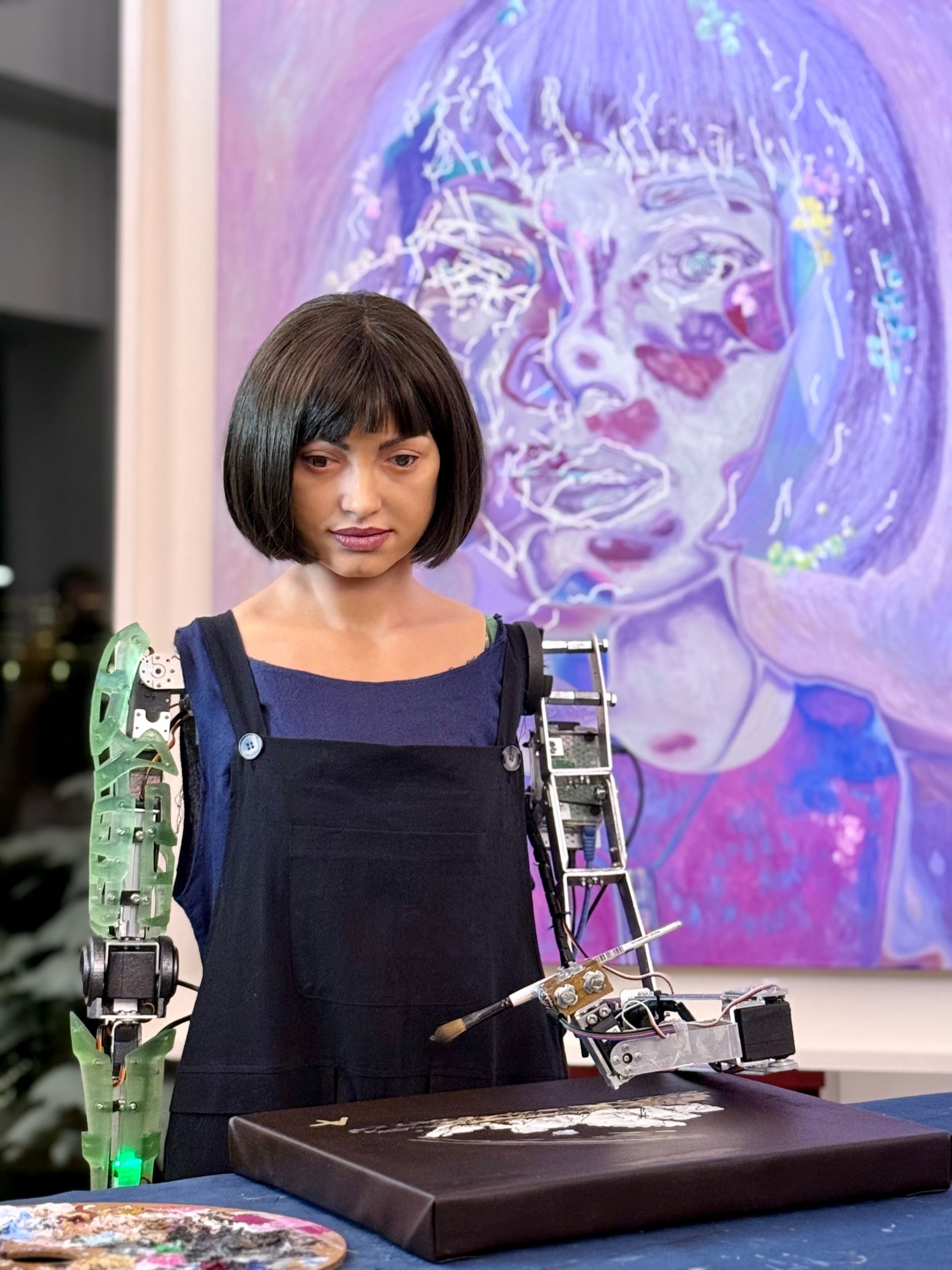
Robot artist Ai-Da has made her architectural debut with a futuristic design now on display at Denmark's Utzon Center. This development is significant as it marks the intersection of artificial intelligence and architecture, illustrating the potential for AI to influence building design in the 21st century.
What Happened
Ai-Da, known as the world’s first robot artist, has expanded her repertoire beyond painting to architecture. Her design, which is part of the "I'm not a robot" exhibition at the Utzon Center in Aalborg, Denmark, showcases a space-age co-living concept for humans and humanoids, inspired by the optimism of the 1950s and 1960s. The design features a smooth-edged pod with sweeping, curved windows, envisioning a future where humans and AI entities coexist harmoniously. The exhibition runs until October 18, 2026, and Ai-Da's work will also be showcased in London later this year.
Why It Matters for the AECM Industry
Ai-Da’s venture into architecture highlights the growing role of AI in the AECM industry. By integrating AI into architectural design, professionals can explore new creative possibilities and efficiencies in building design. This development prompts architects and engineers to consider AI as a collaborative partner, potentially transforming traditional design processes and introducing innovative solutions to architectural challenges. Moreover, Ai-Da's design reflects a trend towards adaptive and futuristic living spaces, emphasizing sustainability and the integration of technology in building practices. This aligns with recent innovations like the VCUarts Qatar's insect-inspired architecture.
What's Next
As Ai-Da's architectural concepts gain attention, industry professionals should monitor how AI-driven designs are received and their impact on the market. The exhibition at the Utzon Center provides a platform for critical dialogue about AI’s role in architecture, and its outcomes may influence future projects and collaborations. Additionally, as Ai-Da's work is set to appear in London, this could further stimulate discussions and developments around AI in architecture, encouraging more professionals to integrate AI into their design processes. This is reminiscent of the transformation of historic sites into modern urban models.
Is your firm ready for what’s next?
VisioneerIT helps AECM and government contractors modernize operations, achieve compliance, and implement AI.
Explore VisioneerIT Solutions →