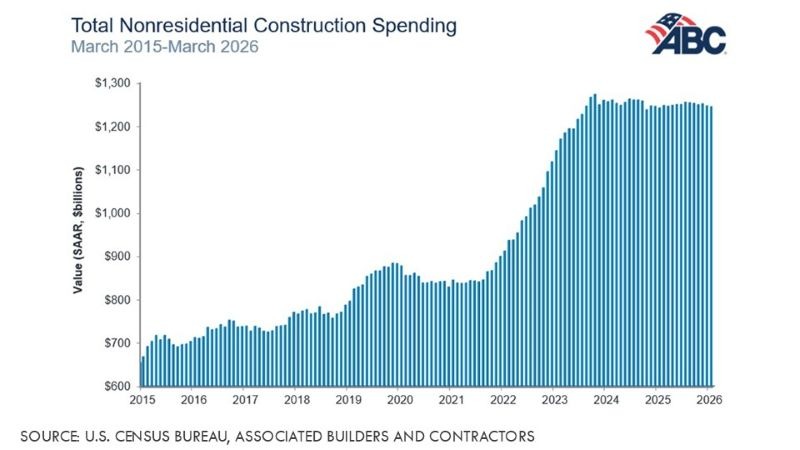
National nonresidential construction spending fell by 0.2% in March 2026, marking a continued downturn in the sector, according to the Associated Builders and Contractors (ABC) analysis of the U.S. Census Bureau data. This trend underscores a broader contraction in the industry, as highlighted by ABC's chief economist, Anirban Basu.
What Happened
In March, the nonresidential construction sector saw a decline in spending, with a seasonally adjusted annualized total of $1.244 trillion. The decrease was noted across both public and private sectors, each falling by 0.2%. Year-over-year, private nonresidential spending has dropped by more than 2%. Out of the 16 nonresidential subcategories, nine experienced declines, with manufacturing-related construction activities notably contributing to the downturn. Despite the overall decrease, data center construction remains a positive outlier, experiencing a significant 34.3% growth year-over-year.
Why It Matters for the AECM Industry
This decline in nonresidential construction spending signals potential challenges for the architecture, engineering, construction, and manufacturing industries. Reduced spending can lead to tighter budgets, project delays, and increased competition for fewer opportunities. The widespread nature of the downturn, affecting both public and private sectors, suggests a need for strategic adjustments in project planning and resource allocation. However, the growth in data center construction offers a glimmer of opportunity, indicating a sector where demand and investment are still strong. Professionals in the industry may need to pivot towards such growth areas to mitigate the impacts of the broader downturn.
What's Next
Industry professionals should closely monitor upcoming economic reports and spending trends, particularly in sectors like data centers that demonstrate resilience. Analyzing shifts in public and private sector investments will be crucial for adapting strategies to weather the current downturn. Additionally, engaging with policymakers and stakeholders could provide insights into potential infrastructure projects or policy changes that may influence future construction spending.
Is your firm ready for what’s next?
VisioneerIT helps AECM and government contractors modernize operations, achieve compliance, and implement AI.
Explore VisioneerIT Solutions →