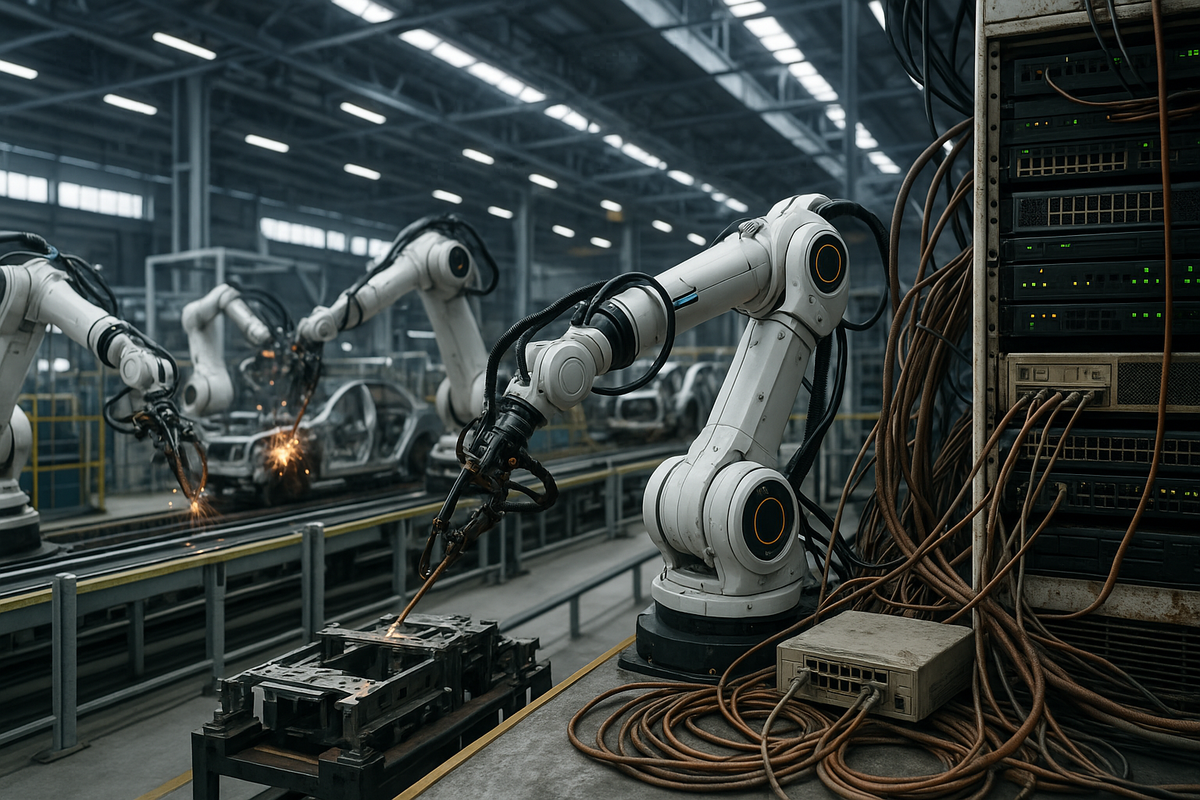
AI is revolutionizing the manufacturing landscape, but many factories are struggling to keep pace with the necessary network infrastructure upgrades. As factories integrate AI to enhance operations, the gap between ambition and infrastructure is widening, posing challenges to efficiency and productivity.
What Happened
The manufacturing sector is increasingly adopting artificial intelligence to streamline processes, enhance productivity, and reduce costs. However, a recent analysis by Manufacturing Dive highlights a critical issue: the existing network infrastructure in many facilities is not equipped to handle the demands of AI technology. The current infrastructure often lacks the bandwidth and reliability required to support AI applications effectively, leading to potential bottlenecks in production lines.
Why It Matters for the AECM Industry
For AECM professionals, this infrastructure shortfall represents both a challenge and an opportunity. The integration of AI technologies promises significant advancements in automation and efficiency, which are crucial for maintaining competitive advantage in the global market. However, without the necessary network upgrades, manufacturers risk underutilizing their AI investments, leading to increased operational costs and potential delays. This scenario underscores the importance of a phased approach to infrastructure development that aligns with AI deployment strategies. Such an approach can mitigate risks and ensure that the potential of AI is fully realized, enhancing overall productivity and sustainability.
What's Next
Manufacturers need to prioritize network upgrades to bridge the gap between AI capabilities and existing infrastructure. This includes investing in high-speed internet, robust data management systems, and reliable cybersecurity measures. Industry professionals should watch for updates in technological standards and best practices to ensure their facilities are prepared to support AI advancements. Moreover, ongoing collaboration between IT specialists, engineers, and manufacturers will be crucial in developing scalable solutions that accommodate future technological innovations.
Is your firm ready for what’s next?
VisioneerIT helps AECM and government contractors modernize operations, achieve compliance, and implement AI.
Explore VisioneerIT Solutions →