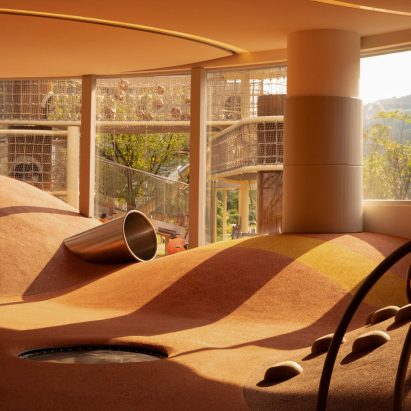
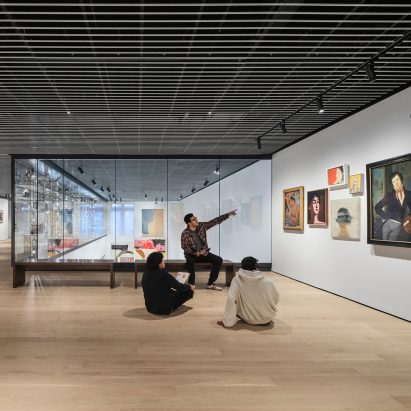
The recently opened Seoul Robot & AI Museum (RAIM) in South Korea is a testament to the future of parametric design in architecture. Designed by Melike Altınışık Architects (MAA), this project leverages advanced technologies to not only create a visually stunning structure but also to demonstrate the innovative methods involved in its construction.
What Happened
In 2024, the Seoul Robot & AI Museum opened its doors, featuring a design that resembles a spaceship, intended to spark wonder and curiosity. The Turkish studio Melike Altınışık Architects utilized parametric design to explore thousands of design options, optimizing structural efficiency and material use while integrating robotic fabrication strategies. The museum's facade, crafted with laser-CNC machining and robot welding, is a result of these parametric processes. The building's structural steel grid informs the gridded patterns of the metal facade panels, creating a cohesive and unified structure.
Studio founder Melike Altınışık emphasized that while parametric design was crucial, the project was not solely driven by this architectural style. Human intervention played a vital role, with the process involving a balance between digital simulations and physical models, and between algorithmic testing and spatial intuition.
Why It Matters for the AECM Industry
The RAIM project exemplifies the transformative potential of parametric design and advanced manufacturing techniques in the AECM industry. By employing Design for Manufacturing and Assembly (DFMA) methods, the building components were prefabricated off-site with robotic systems, then assembled on-site. This approach not only enhances construction efficiency but also reduces waste and labor costs. The integration of smart building systems, such as adaptive climate control and data-driven management, further underscores the operational and environmental benefits of these technologies.
For the AECM industry, the RAIM project highlights the competitive edge that can be gained through the adoption of parametric design and robotic fabrication. These methods enable architects and engineers to push the boundaries of design while maintaining cost-effectiveness and sustainability.
What's Next
As parametric design and robotic fabrication continue to evolve, industry professionals should monitor advancements in sustainable architecture and modular housing solutions.
Is your firm ready for what’s next?
VisioneerIT helps AECM and government contractors modernize operations, achieve compliance, and implement AI.
Explore VisioneerIT Solutions →