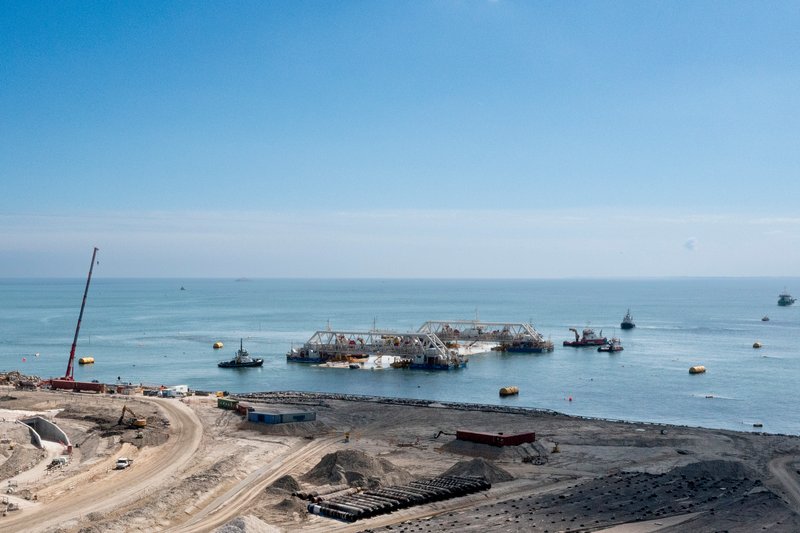
The recent submersion of the first section of the Fehmarnbelt tunnel marks a significant milestone in the construction of the world's longest immersed road and rail tunnel. This monumental engineering feat, linking Denmark and Germany, involves a precast concrete section measuring 217 meters in length and weighing 73,500 tonnes.
What Happened
This week, the first segment of the 18-kilometer Fehmarnbelt tunnel was successfully submerged near the Danish island of Lolland. The operation commenced on May 4th and involved the use of five tugboats to maneuver the massive section over two kilometers from the fabrication hall to its designated location. To ensure its stability on the seabed, 4,500 tonnes of ballast concrete were added, and the seabed was prepared with a gravel layer. The section, consisting of two road tubes, two rail tubes, and a service tunnel, was sealed and filled with air, except for the lighter railway tubes, which were adjusted with temporary water chambers to ensure even submersion.
Why It Matters for the AECM Industry
The successful submersion of the Fehmarnbelt tunnel's first section sets a precedent for large-scale, submerged tunnel construction. For engineers and contractors, it underscores the importance of precise planning and execution, as the element had to be positioned within millimeters of its target. This project highlights the increasing complexity and scale of infrastructure projects, requiring advanced equipment and meticulous preparation. The tunnel's completion is expected to enhance logistics and transportation efficiency between Denmark and Germany, potentially influencing regional trade dynamics and economic development.
What's Next
With the first section in place, the focus will shift to the continued submersion and connection of subsequent tunnel segments. Industry professionals should monitor the project's progress, as it will offer insights into managing risks and overcoming challenges associated with large-scale underwater construction. Additionally, the development of a €1 billion business and logistics district in Ringsted, Denmark, near the tunnel site, will likely drive further construction and investment opportunities in the region.
Is your firm ready for what’s next?
VisioneerIT helps AECM and government contractors modernize operations, achieve compliance, and implement AI.
Explore VisioneerIT Solutions →